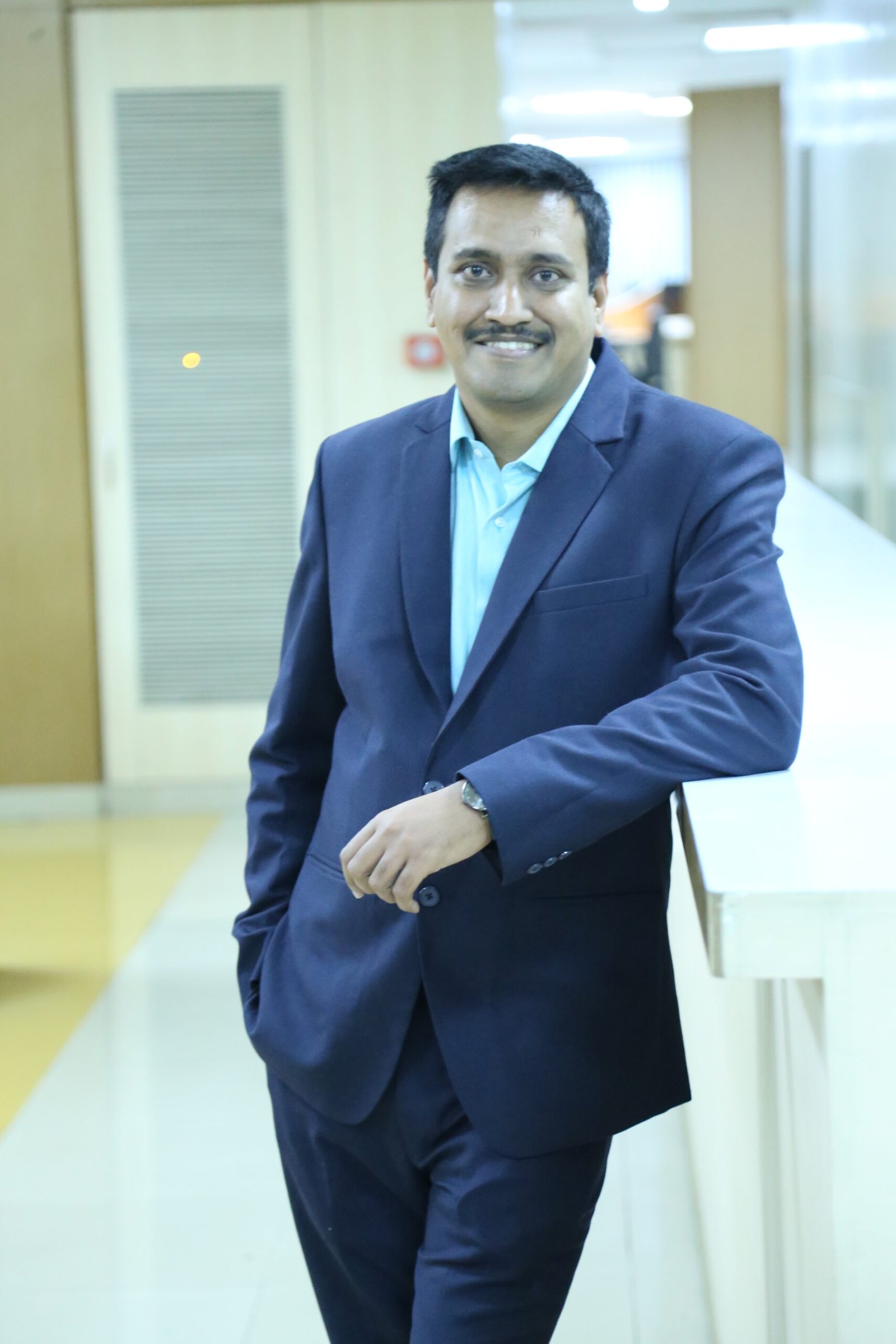


New Delhi: Karnan A, a 30-year-old scholar from Sivagangai district in Tamil Nadu, has built a distinguished career in scientific research after overcoming significant economic, educational and social barriers with support from the National Fellowship for Scheduled Caste Students (NFSC) Scheme.
He is now serving as a full-time Scientist-C at the CSIR Fourth Paradigm Institute, Bengaluru.
Karnan A belongs to a Scheduled Caste community and is the first researcher in his family and among the very few researchers from his community.
His parents are seasonal farmers with limited and irregular income, while his two brothers also depended on the same family income for their education.
From school through his postgraduate studies, Karnan A undertook daily-wage work on weekends to pay his fees and meet his basic needs.
During the final year of his postgraduate course, he also began taking tuition classes, although the income remained insufficient.
In 2017, Karnan A cleared the National Eligibility Test for Lectureship on his first attempt but narrowly missed the Junior Research Fellowship cut-off.
Without a fellowship, he had to meet his PhD fees and research expenses entirely through income from tuition classes.
Karnan A Faced Financial and Academic Challenges
As the first researcher from his village and one of the very few researchers in his taluk, Karnan A also lacked academic guidance, mentorship and professional networks.
The combination of economic, educational and social barriers made it extremely difficult for him to continue his doctoral studies without placing an additional burden on his family.
A major turning point in Karnan A’s academic journey came in 2019 when he was selected for the National Fellowship for Scheduled Caste Students based on his December 2018 CSIR-UGC NET Lectureship score.
His fellowship assistance commenced in September 2019. Under the NFSC support, Karnan A received approximately Rs 16 lakh in the form of fellowship support, House Rent Allowance and contingency assistance.
The fellowship provided Karnan A with financial freedom for the first time in his academic life. He no longer had to depend on daily-wage work or tuition income to meet his fees and research expenses.
The financial support also gave Karnan A greater confidence and peace of mind, allowing him to concentrate fully on his research. Motivated by the support, he appeared for the NET examination again and successfully qualified for the Junior Research Fellowship.
Also Read: Semiconductor Industry Faces Global Shifts as India Eyes Strategic Opportunity
Karnan A Completes PhD, Publishes Six Research Articles
Karnan A went on to complete his PhD, with his thesis receiving a ‘Highly Commended’ distinction. During his research career, he published six research articles in SCI/SCIE-indexed international journals.
After completing his doctorate, Karnan A was selected as an Institution of Eminence Postdoctoral Fellow at the Indian Institute of Science, Bengaluru. The fellowship provided him with Rs 67,000 per month along with House Rent Allowance.
Karnan A subsequently joined the CSIR Fourth Paradigm Institute, Bengaluru, as Scientist-C. He is currently placed at Level 11 under the Seventh Pay Commission, with a basic pay of Rs 69,700 per month.
The support received through the NFSC fellowship also enabled Karnan A to assist his family and contribute towards his brother’s education. He now supports his parents and contributes to the education of children in his community.
Karnan A on the Impact of NFSC Fellowship
Speaking about the impact of the fellowship on his academic and professional journey, Karnan said, “This fellowship did not just fund my research; it gave me freedom, confidence and a future. Whatever I have achieved in my life after completing my PhD has been possible because of this fellowship.”
Karnan’s journey highlights how timely fellowship assistance can help a determined scholar overcome economic and social barriers, pursue higher education, achieve academic excellence and build a career in scientific research.
He expressed sincere gratitude to the Department of Social Justice and Empowerment for providing the fellowship and to the University Grants Commission for its effective implementation.